New steaming system by Mobildampf: The Steam – Mixer

October 13th, 2010

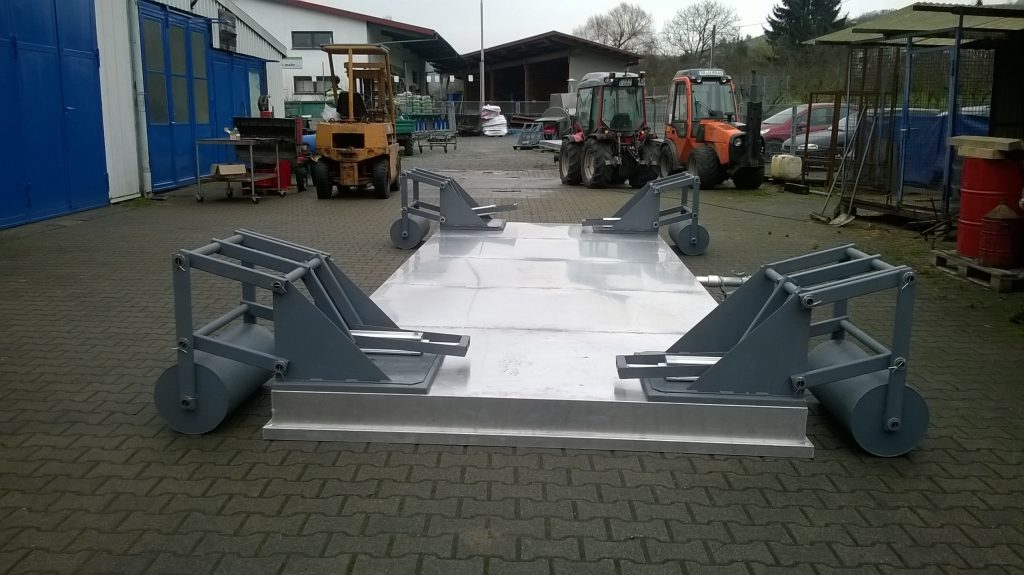
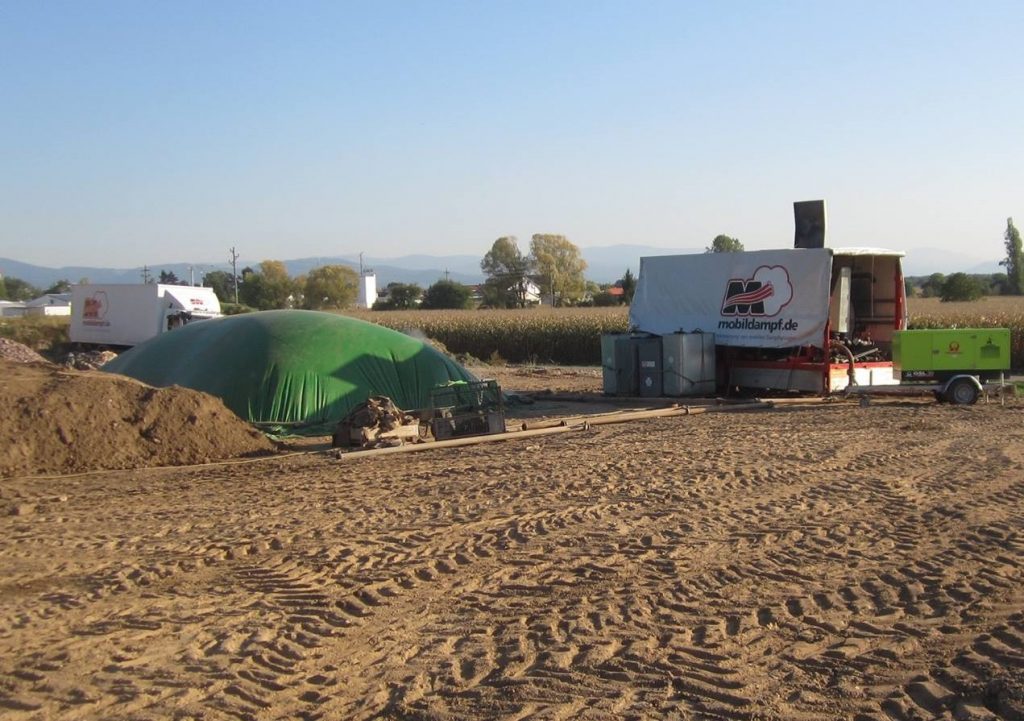
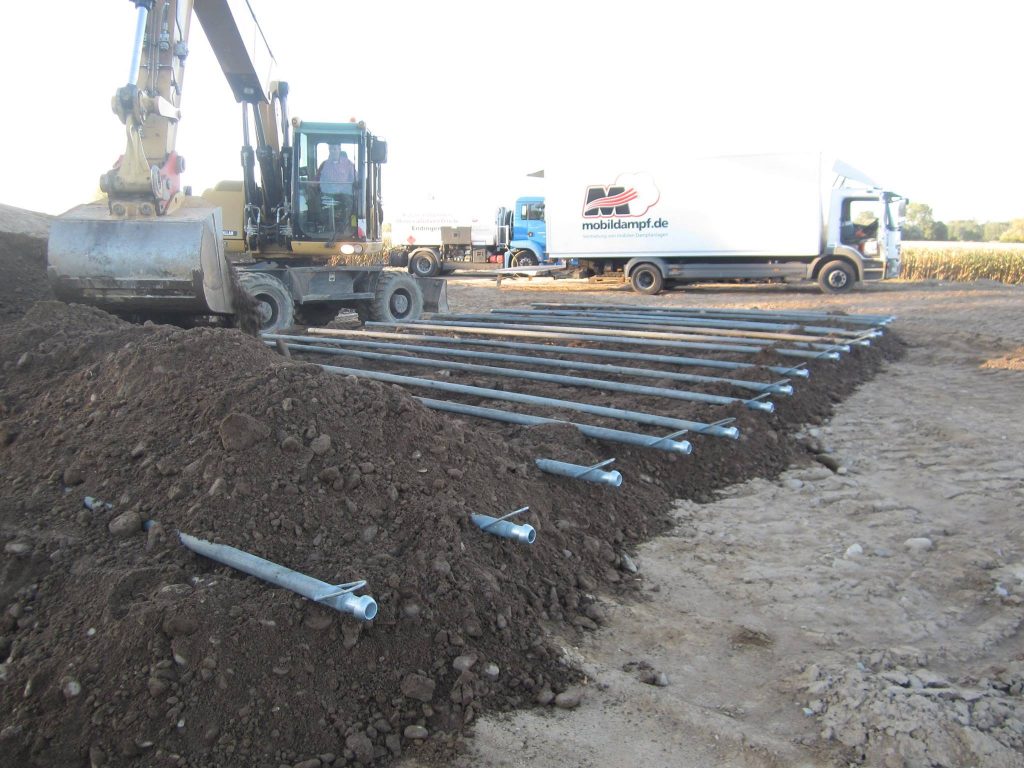
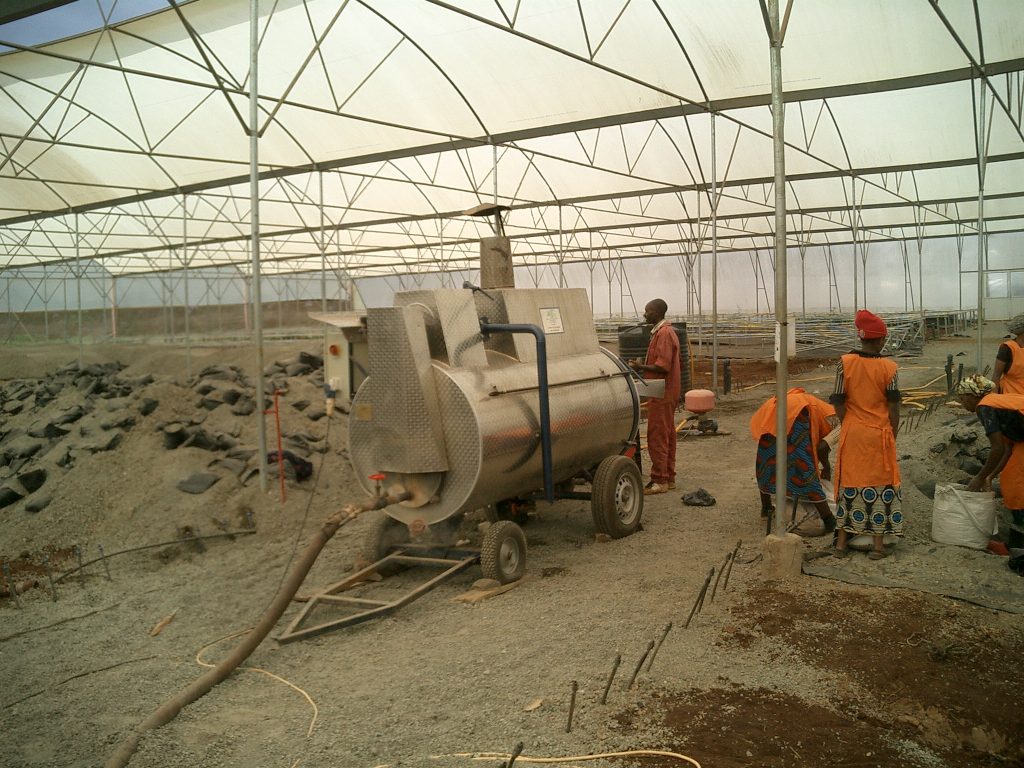
Mid of September Mobildampf has introduced a new steaming system called Steam – Mixer. Mobildampf is one of the leading steam device rental companies in Germany which mainly offers sheet steaming.

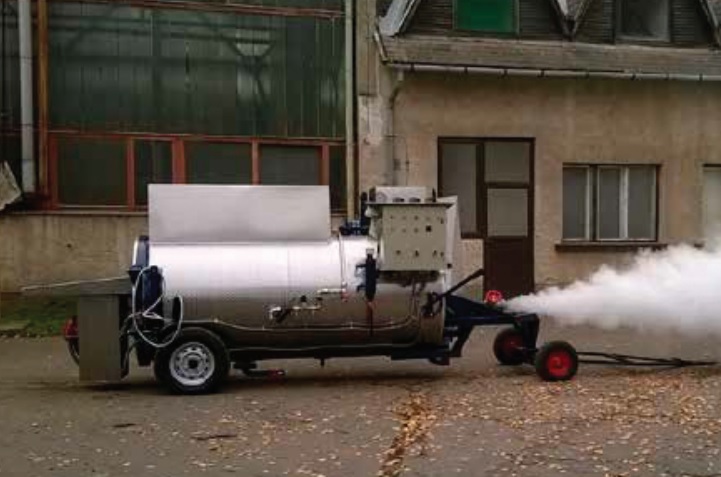
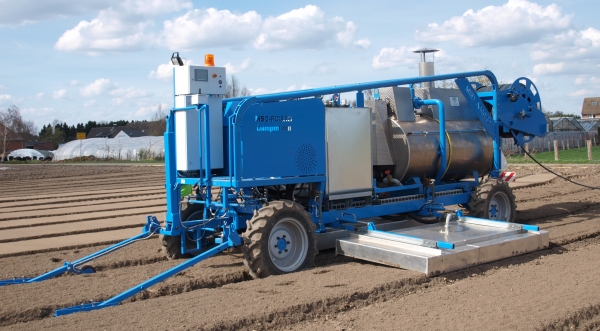
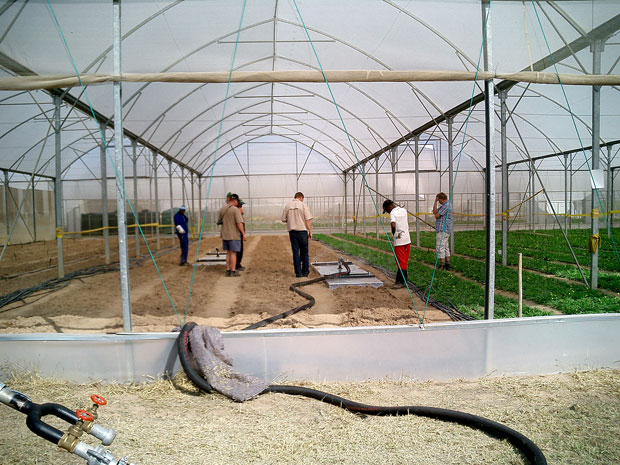
The goal of the innovation was to provide a simple and continuous process for sheet steaming which can be used outdoors and in green houses for steaming depths at 10-25 cm.

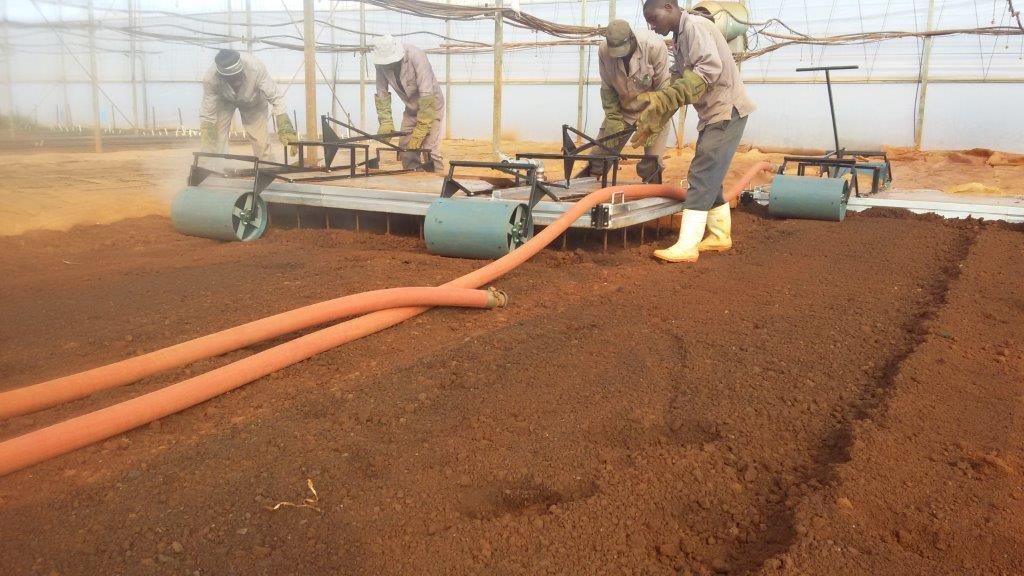
At a field show of the Service Center for Rural Areas (DLR) Rheinlandpfalz (Rineland Palatinate) a fully functional prototype was presented which reaches about 10 cm of steaming depth. The device was simply attached to a narrow-track tractor which sterilized an area of about 200m²/h at a speed of 100m/h.

Continuous steaming with a Steam - Mixer

Continuous steaming with a Steam - Mixer

In the future the device will be extended to allow steaming depths to up to 25cm and that 3 tracks can be steamed simultaneously.

Please click on the following link to view a video that shows the use of the system:
Steaming-mixer by Mobildampf

Vegetable loves steamed soil – 30% more yield

September 20th, 2010

The Service Center for Rural Areas (DLR) Rheinlandpfalz (Rhineland-Palatinate) has demonstrated the results of an extensive research series for weed control in beet cultures (in particular for arugula) at a field show on the 16th of September 2010. The research study compared the effectiveness of several herbicides and hot steam.

The tests were started in spring and repeated in summer 2010. The results were impressive and can be concluded as follows:

The use of herbicides decreased yield by up to 80%, depending on what kind of herbicide was used against what kind of weed. Steaming however lead to an increase of yield due to a significant growth projection of about 2-3 weeks. Thereby steam had a 100% effectiveness against all kinds of weed.

Arugula on steamed soil

Arugula on steamed soil

Arugula after herbicide treamtment

Arugula after herbicide treamtment

Beetroot on steamed soil

Beetroot on steamed soil

Beetroot after herbicide treatment

Beetroot after herbicide treatment

This positive effect was reconfirmed at a second research study during summer. The report was published on hortigate.de in September 2010. You may download the document as a PDF by clicking on the following link:

Research report of DLR Rheinlandpfalz, September 2010

Steaming at the Horticulture Day of Wädenswil University

September 7th, 2010

Swiss vegetable growers are facing major challenges as no permitted herbicides for weed control are available in particular for arugula cultures.

Therefore the company MSD from Germany, one of the leading soil steaming specialists, presented the advantages of steaming for weed control at the Horticulture Day of Wädenswil University in Switzerland. Mr. Seifert, the CEO of MSD, demonstrated the effectiveness of steaming against all kinds of weeds to all of the 100 visitors. Present research results were introduced which confirm the positive effects of hot steam.

MSD was the only privately owned company which was invited by the university and its associated Agroscope-Institute to present their products and methods.

Hot steam is highly effective against phytopathogenic organisms also in paint factory

August 1st, 2010

The production of environmental friendly paint strictly requires hygiene in order to guarantee high product quality. One of the leading producers of special paints in Germany, the company Schulz GmbH located in the province Rhineland Palatinate, has discovered steam as means for sterilization in order to disinfect storage tanks after the production of organic paint. In particular, tanks need to be freed from bacteria of the family Pseudomonas.

In the mid of July 2010 first steaming tests took place under the supervision of the company Thor GmbH located in Speyer. A steam generator manufactured by MSD with an output of 220 kg / h was used. Steam was induced into the tanks through a special pipe system. The tanks, having a volume of a bout ~8m³, were steamed for about half an hour. Steam was induced through customized injectors at the bottom of the tanks. Condensate ran off through outflow ports at the bottom.

The results were confirmed last week by the company Thor. Steaming lead to complete decontamination of storage tanks. After steaming no bacteria could be found. After the successful tests, the paint producer considers the installation of a stationary steaming system for their operations.

Poisenous ragwort is still advancing

July 18th, 2010

Bad news for vegetable and salad growers: Poisenous ragwort is further spreading throughout Germany. Just within a couple of decades this plant which is mainly original to the southern regions has developed large populations in south-west Germany coming from Belgium.

For this reason ragwort grows into a threat for the organic and conventional, heavily automated horticulture.
Ragwort contains substances which have a harmful effect on liver and nerves. After consumption they might even cause death. If parts of ragwort get into the harvest, as it became public in 2009, growers might face incalculable consequences.

Growers hardly have any options to fight the danger. There is no herbicide which provides 100% protection. Furthermore the leaves of ragwort seedlings look almost exactly like arugula, which makes a later automatic or manual extraction after harvest almost impossible.

The responsible government office of the German federal state Rhineland-Palatinate (DLR Rheinlandpfalz) is presently reassessing existing methods to fight ragwort. Soil steaming is also among them (please see report from May2010). The results of the investigation will be published shortly.

Isle Mainau controls weed with steam

June 16th, 2010

One of the most beautiful and famous gardens in Germany uses steam as a comprehensive means to control weeds. The so-called dahlia hill was treated sucessfully with steam after other means of weed control had become ineffective and too costly.

In June 2010 Isle Mainau asked the company mobildampf.de to gradually steam flowerbeds of altogether 2000 m² via sheet steaming.

Within just 3 days and after about 50 operating hours the area was sterilized using 2 steam boilers. Among was one steam boiler type S2000 produced by MSD / Durbach with an output of 2000kg steam/h. The beds were steamed down to 30 cm depth reaching a temperature of 85°C.
Within the upcoming years weed pressure on the dahlia hill has been effectively resolved.

The control of invasive plants with hot steam enters the final stage

May 26th, 2010

The regional board of Freibug / Germany has finished its research on the control of Japanese knotweed with mere hot steam without chemicals which was started in autumn last year. The last treatment process was conducted to distroy the plant’s rhizomes in deep soil layers.

Already in september 2009 the experiment with hot steam was started. Large areas on the shore of the river Rench which were highly contaminated with Japanese knotweed were excavated down to 20-30 cm depth and steamed completely. The success oft he treatment of more than 95% was already visible at the end of the year 20009 and even more at the beginning of 2010. On the treated area only scattered sprouts appeared as expected.

Counter measures against these sprouts were taken by depth treatment with steam. High pressure lances made by the company MTM-SPINDLER were first driven into the soil down to about 1 m depth. The soil was broken and loosened with induced highly compressed air. Then steaming lances were applied and host steam at 200°C induced for about 15 min.

Already in May 2009 a similar test was made together with a regional government organization in the southwest of Germany to sucessfully kill all surviving germinable root residues after a first superficial treatment of contaminated area.
Hot steam denatures all germinable plant parts in the soil and harms them sufficiently that invading germs weakens the plants to a degree that no offspring can be produced.
Later on the positive results will be further supervised and checked if there is a sustaining positive effect.

Horticulture Service Center tests the effectivity of hot steam against weeds and other pests

May 9th, 2010

On the 4th of May 2010 the service center Rheinlandpflaz in Schifferstadt conducted a bigger field test on weed control. A testing area of 2.000 m² was segmented into several parcels on which different methods of weed control were applied and compared.

Ragwort in focus
Growers in the region were particularily challenged by ragwort in 2010. Hence the testing area was in particular contaminated with ragwort.

Besides the application of chemical means also steaming was considered as alternative method.

16 parcels were steamed with steaming hoods. Testing conditions were suboptimal since the soil was wet and overly compacted due to rain on the previous day. Nevertheless steam penetrated the soil well and heated it up to 99°C down to 5 cm depth within 6.5 minutes. The steamed area was covered with a light sheet afterwards. 10 minutes after steaming temperatures of 95°C could be maintained in 5 cm depth. In 10 cm depth 82°C could still be reached.
It is expected that the steamed area was completely freed from weeds.
Hence the culture can be harvested without weeds and ragwort afterwards.

Friedrich Miescher Institute confirms high effectivity of hot steam against weed seeds

April 11th, 2010

One of the leading bio medical research institutes in Switzerland, the Friedrich Miescher Institute, has conducted comprehensive research on the killing effect of hot steam on different weed seeds.
Scientific research was necessary, since the institute had to master the task to sterilize large areas which were cultivated with genetically modified plants.
All germinable plant parts and seeds had to be completely destroyed.


Soil steaming was the first choice

In order to proof the success of the measure at different locations of the contaminated area small bags of seeds were put into the soil before the steaming process. The seeds were examined after steaming on their germination capacity.
The result was 100% convincing: All seed bags exposed to steam, also those which were put in deeper soil layers down to 20cm, were completely killed. No shooting was discovered.

Mobile Steaming System is awarded the INDEGA Innovation Award 2010

March 7th, 2010

Success in horticulture requires perfect control of quality, operating cost, crop and output.

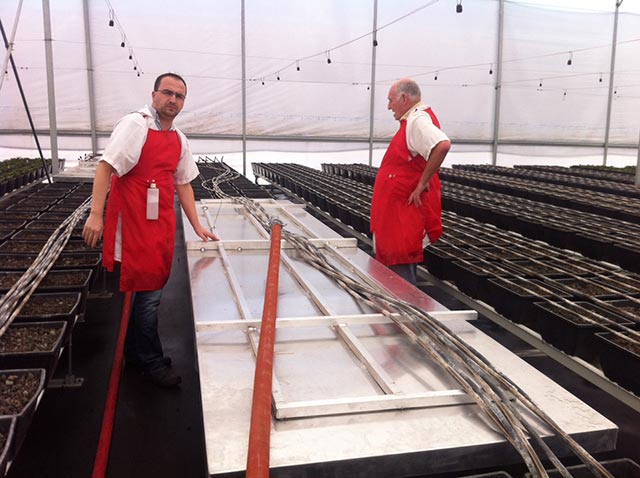
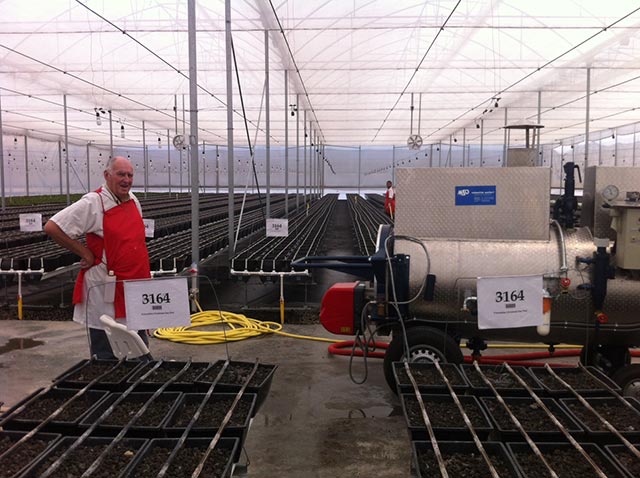
In cooperation with Bärtschi‐FOBRO AG (Switzerland), MSD Ltd. from Durbach (Germany) has mastered the task to develop and build a machine which allows a rational 24 hour operation without staff to steam large beets efficiently.

In particular wholesalers increase pressure on vegetable growers to sanitize soil without chemicals. The arugula incident in 2009 where poisonous ragwort was found in salat packs has further increased pressure.

Steaming Mobile - Full Automat in operation on field

Steaming Mobile - Full Automat in operation on field

1. Video Youtube: Open field operation of the steaming robot
2. Video Youtube: First test of the steaming robot in Februray 2010

Steaming is one of the few suitable methods that are able to meet all requirements. Furthermore a high level of automation could be reached with MSD-Fobro Steaming Robot A600‐12.
The first two fully automatic steaming robots could be handed over after several months of challenging development work.

On the occasion of the IPM 2010 in Essen the steaming robot was introduced to the public for the very first time. The machine was awarded with the Indega innovation award for technical advancement. The price was awarded since the innovation provides a solution for vegetable growers to efficiently control weed pressure and diseases in beets.